
Address
P.O. Box. 29304, San Jose, CA 95123
 Comprehensive
Cancer Consultation Intake Form
Comprehensive
Cancer Consultation Intake Form


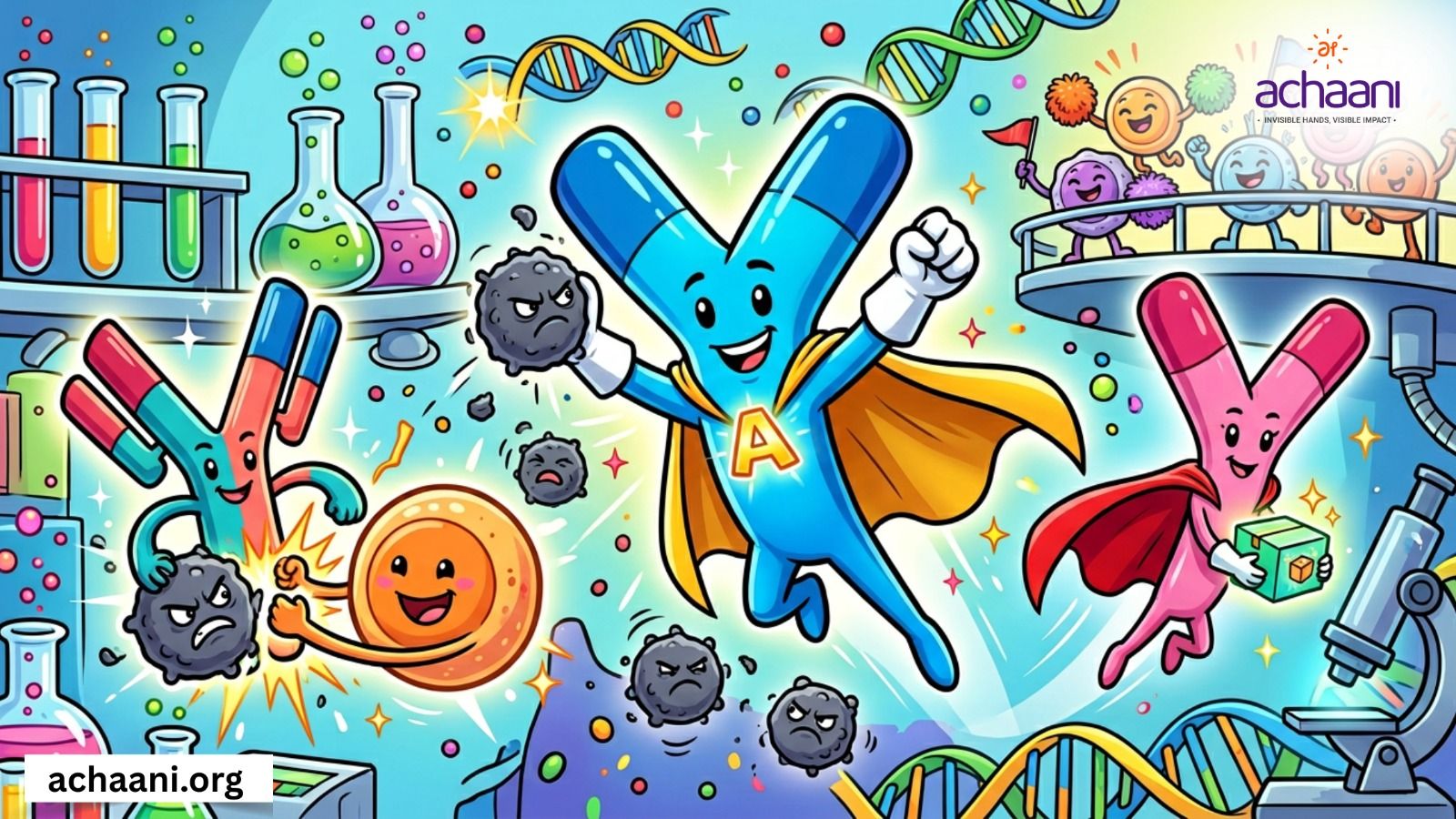
Have you ever gotten a shot or vaccine at the doctor's office to protect you from getting sick? That shot works because of something amazing inside your body called antibodies. Antibodies are tiny proteins that your immune system makes to fight germs and keep you healthy. Scientists have learned how to make special versions of these antibodies in the lab, and today they are playing an important role in antibody therapy for cancer, helping treat serious diseases like cancer.
Fifty years ago in 1975, two scientists named Georges Kohler and Cesar Milstein made an incredible discovery. They figured out how to make identical copies of one single antibody in a lab. These are called monoclonal antibodies (mono-KLON-al).
"Mono" means "one," and "clone" means "an exact copy." Their discovery was so important that they won the Nobel Prize - one of the biggest awards a scientist can receive!
Think of an antibody like a tiny lock-and-key. Each antibody is made to fit onto a very specific target, just like how a key only fits one lock. Scientists design these lab-made antibodies to seek out harmful things in the body like cancer cells and either destroy them or stop them from growing, making them an important part of antibody therapy for cancer. This simple lock-and-key idea helps explain what happens inside the human body.
Since that first discovery, scientists have gotten much better at building these tiny soldiers. At first the antibodies came from mice, but they didn't work perfectly in humans - the human body would sometimes fight them off! So, scientists found ways to make antibodies that look more like human ones.
Today, over 212 antibody medicines have been approved to treat patients around the world, helping tens of millions of people with diseases like cancer, arthritis, and even multiple sclerosis.
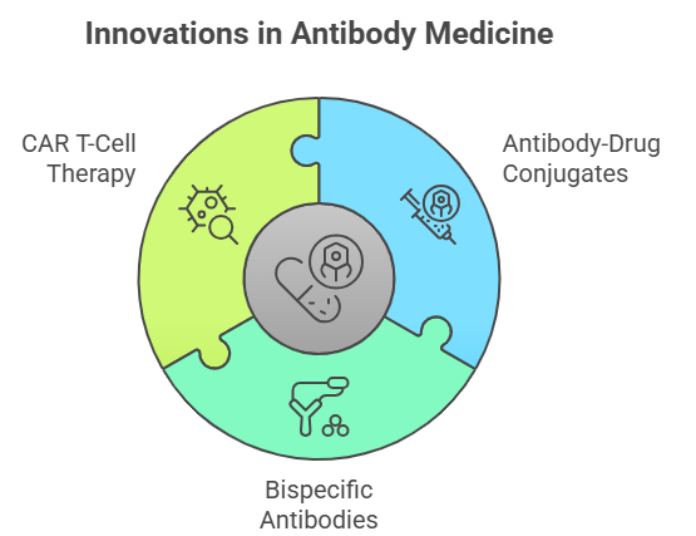
Scientists didn't stop at regular antibodies. They invented some truly amazing new tools.
These are like antibodies with two arms - one grabs the cancer cell and the other grabs an immune cell, pulling them together so the immune cell can destroy the cancer, making them a powerful advancement in antibody therapy for cancer.
Imagine attaching a tiny poison to an antibody and sending it straight to a cancer cell. The antibody acts like a GPS, delivering the medicine exactly where it's needed without harming healthy cells.
Scientists take a patient's own immune cells, give them a special upgrade using antibody technology, and send them back into the body as an army to fight cancer.
Scientists are now using artificial intelligence (AI) - the same kind of technology behind smart devices to help design even better antibody medicines faster, helping advance antibody therapy for cancer with more precise and effective treatments.
They're also working on antibody pills you could swallow instead of getting an injection, and medicines that can reach the brain to treat diseases like Alzheimer's.
Every time a scientist improves antibody medicine, real people get better. Kids, parents, grandparents - people just like you and your family are living longer and healthier lives because of this incredible science.
The story of antibody medicines shows that curiosity, hard work, and creativity can change the world, one tiny molecule at a time, while continuing to improve antibody therapy for cancer and giving hope to millions of patients worldwide.
Based on: "Fifty Years of Monoclonals: The Past, Present and Future of Antibody Therapeutics" - Nature Reviews Immunology, 2025
